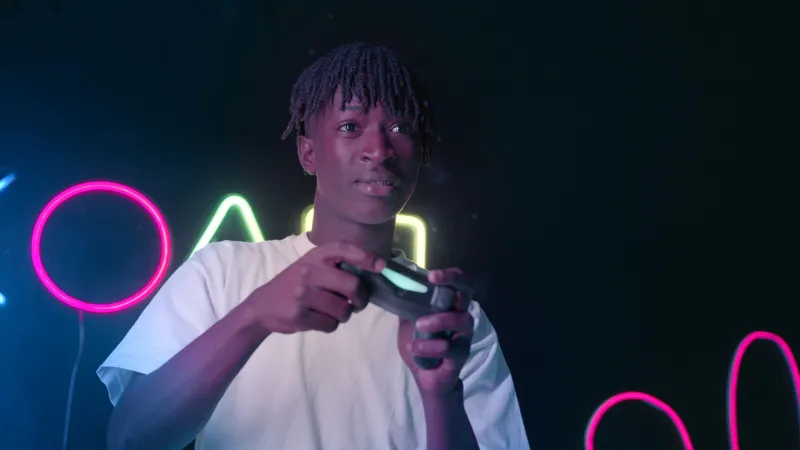
Value Math Is the New Meta: Gamers Are Doing the Digits Before They Hit Buy

Somewhere along the way, buying a video game started to feel like applying for a mortgage. You check the price, you flinch, you open a spreadsheet (or at least a Notes app tab), and you ask yourself the question that defines modern gaming purchases: is this worth it?
That question used to be vibes-based. Now it's arithmetic.
The Rise of the Cost-Per-Hour Calculation
Ask around any gaming Discord or subreddit and you'll find the same formula repeated like scripture: divide the price by expected hours of play, and if the result lands under a dollar an hour, you've got yourself a deal. A $70 game that delivers 80 hours? That's cheaper per minute than a movie ticket, cheaper than a concert, cheaper than most things you can do on a Saturday night in America.
But flip it around and the math gets brutal. A $70 campaign that wraps in eight hours — with a battle pass dangling for another $10 and a cosmetic pack whispering your name at checkout — suddenly costs more per hour than a night at a nice steakhouse. Gamers are noticing. Loudly.
This isn't just frugality. It's a cultural shift. The phrase "value math" has become shorthand for a whole mindset: entertainment is an investment, and every purchase gets scrutinized like a line item on a budget sheet.
Game Pass Broke Our Brains (In a Useful Way)
Credit where it's due — or blame, depending on your perspective — subscription services rewired how we think about game pricing. When a monthly fee unlocks hundreds of titles, paying $70 outright for one game starts to feel like a choice rather than a default. Why buy the cow when the cow is included in your $15-a-month plan?
The side effect is that players got trained to evaluate games transactionally. Once you're used to sampling a game for free and dropping it after two hours without guilt, paying full price demands a stronger justification. The bar moved. Publishers didn't lower it back.
The Refund Button Changed Everything
Steam's refund policy deserves its own chapter in the history of consumer power. Two hours of playtime, fourteen days, money back — no interrogation, no hassle. That policy quietly transformed the entire market. Now, if a game doesn't hook you in the first two hours, you don't stew about your wasted money. You refund it and move on.
Console platforms followed with their own versions, and suddenly the "you bought it, you're stuck with it" era was over. Developers know it too. That's arguably part of why demos are creeping back and why launch-day disasters get patched with genuine urgency — the refund button is always one bad patch away from getting pressed.
The Deluxe Edition Backlash
Here's where the math gets personal. The base price is one thing, but the real resentment lives in the stack: $70 game, $30 deluxe upgrade, $10 season pass, $12 battle pass, $5 skin that somehow costs more than a full indie game. When everything gets itemized, players start itemizing back.
The result? A growing number of players are adopting what you might call a "base game only" doctrine. Buy the core product, skip the add-ons, wait for the complete edition at 60% off eighteen months later. It's the gaming equivalent of never paying full freight for a flight — annoying to pull off, but deeply satisfying when you do.
Is This Actually Bad for the Industry?
Here's the uncomfortable part: the value math crowd has a point, but so do the developers. Game budgets have ballooned into the hundreds of millions, and $60 in 2005 isn't $60 today. Some of the price anxiety is legitimate economics colliding with legitimate nostalgia.
But the consumer side has the stronger argument right now, mostly because publishers haven't exactly earned the benefit of the doubt. Launch-day bugs, cut content sold separately, live-service games that go dark within a year — the industry's track record is why players audit. Trust is the real currency here, and it's in short supply.
The Receipts Are Here to Stay
Whether publishers like it or not, the spreadsheet era is permanent. Players have tools now — refund policies, subscriptions, review culture, wishlists that track price drops automatically. The information asymmetry that used to favor the seller is gone.
So the next time a big release hits $70 (or $80 — it's coming), expect the same ritual: the forums light up, the math gets done, and the purchase decision gets made not on hype, but on homework. Gamers aren't just playing the game anymore. They're playing the price.