Done With the Sequels: Gamers Are Quietly Ditching AAA for Something Real

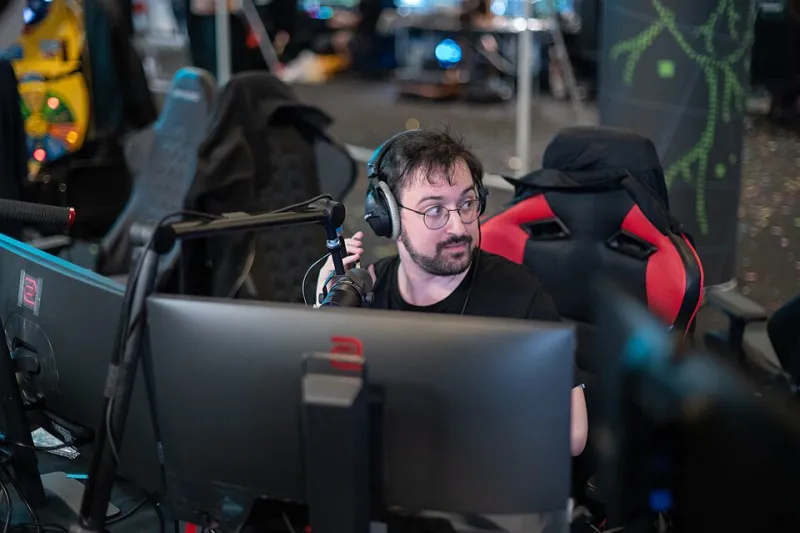
Photo: Joel McDonald (Polyculture), CC BY-SA 3.0, via Wikimedia Commons
Let's be honest about something. The last time a major AAA release genuinely surprised you — not just technically impressed you, but actually made you feel something — when was that? For a lot of players, that answer is getting harder to come up with. Meanwhile, games like Hades, Hollow Knight, Unpacking, and Vampire Survivors keep showing up in "best of" conversations year after year, and none of them came from a studio with a thousand employees and a nine-figure marketing budget.
This isn't a coincidence. It's a shift. And if you spend any time watching what's trending on Twitch or poking around Steam's top sellers on a random Thursday, you can see it happening in real time.
The Streaming Data Tells a Story
Twitch viewership numbers for indie titles have been climbing steadily since around 2020. Part of that is pandemic-era audience expansion — more people started watching gaming content, and not all of them defaulted to the biggest names. But the trend has held even as overall streaming numbers normalized.
Games like Lethal Company — a low-budget indie horror title made by a single developer — absolutely dominated Twitch in late 2023. At its peak, it was pulling more concurrent viewers than several major AAA titles that launched the same season with massive promotional pushes. Players weren't just buying it; they were watching it, talking about it, and clipping it constantly.
That kind of organic streaming energy is something money genuinely cannot buy, and it's become one of the clearest signals that player appetite is shifting. When a game is fun to watch and talk about, it spreads. When it's fun because of genuine creativity rather than production scale, that's an indie advantage that's hard to replicate.
What Big Publishers Stopped Offering
Talk to gamers in any forum, subreddit, or Discord server and a few themes come up over and over when they explain why they've cooled on major franchises. Monetization is almost always at the top of the list.
The battle pass. The season pass. The cosmetic store. The "deluxe edition" that costs $90 and still has a storefront inside it. Players aren't just annoyed by these things — they feel disrespected by them. There's a growing sense that major publishers view their audience as revenue units rather than people, and that feeling has consequences.
"I bought a AAA game last year, won't name it, and within the first hour there were three different prompts to spend more money," said Derek Callahan, a 28-year-old gamer from Nashville who streams part-time on Twitch. "I refunded it and went back to a $12 game I'd been ignoring in my library. Haven't looked back."
Derek's experience isn't unique. Steam's refund system has quietly become a protest mechanism for players who feel burned by launches that overpromise and underdeliver. And with review bombing and social media pile-ons following every controversial AAA release, publishers are learning that player goodwill is a lot more fragile than it used to be.
Indie Games Are Doing the Emotional Heavy Lifting
Beyond the business stuff, there's something more personal driving this shift. Indie games are telling stories that major studios won't touch.
Celeste explored anxiety and mental health in a way that felt raw and real. Night in the Woods captured the specific, suffocating feeling of coming home to a dying small town. Disco Elysium built a world so politically weird and philosophically dense that it still gets discussed in college courses. These aren't the kinds of pitches that make it through a corporate greenlight meeting at a major publisher — but they're exactly the kinds of experiences that stick with players for years.
There's also the question of creative risk. When a studio has 800 employees and $200 million on the line, nobody wants to be the person who approved the weird idea that tanked the quarter. Indie developers, working with smaller teams and lower financial stakes, can afford to be genuinely experimental. Sometimes that produces junk. But sometimes it produces Undertale.
How This Is Reshaping the Industry
The ripple effects are starting to show up in places beyond just sales charts. Major publishers are acquiring indie studios at a rapid clip, trying to bottle whatever it is that makes them work. Microsoft, Sony, and Take-Two have all made notable indie acquisitions in recent years. The results have been mixed — sometimes the magic survives, sometimes it gets corporate-ified into oblivion.
More interesting is what's happening at the distribution level. Steam's revenue split, long criticized as too favorable to Valve, has pushed some developers toward platforms like itch.io or direct sales models. Epic's exclusivity deals briefly reshuffled the storefront landscape. And the rise of subscription services like Xbox Game Pass has created new discovery pathways for indie titles that might otherwise never find their audience.
Game Pass in particular has been a genuine equalizer in some ways. When a player doesn't have to risk $20 on an unknown indie title, they're more likely to try it. And trying it is all most of these games need — because once you're an hour into Hades or Tunic, you're not going anywhere.
The Players Are Voting With Their Time
Here's the bottom line: players have limited hours, and they're increasingly choosing to spend them somewhere that feels worth it. Steam's "hours played" metric — which you can see on any public profile — tells a story that purchase numbers alone can't. People are finishing indie games. They're returning to them. They're recommending them to friends.
The era of buying a $70 game, playing it for six hours, and feeling vaguely cheated is generating real behavioral change. Not everyone is swearing off big franchises forever — a new Grand Theft Auto or Zelda still moves mountains. But in between those events, the space where player attention used to default to the next big sequel? That space is filling up with something smaller, stranger, and often a whole lot more interesting.
We've been watching these numbers closely at 164343, and honestly? The indie wave doesn't look like it's slowing down. If anything, it's just getting started.