Forget the Follower Count: How Streamers Are Logging Off the Grind and Falling Back in Love With Gaming
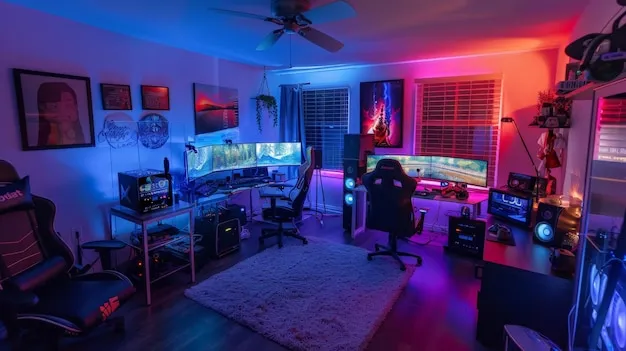
Photo: streamer relaxed playing video games at home cozy setup, via img.freepik.com
There's a number on every streamer's screen. Sometimes it's a follower count. Sometimes it's average concurrent viewers, clip impressions, or the all-important "algorithm score" that platforms never quite explain but everyone obsesses over anyway. For years, that number has been the whole point. Grow it. Feed it. Worship it.
But something's shifting. Quietly, and then all at once, a chunk of the streaming community is doing the unthinkable: they're ignoring the number.
The Metrics Trap Nobody Warned You About
If you've spent any time in streaming culture — whether you're a creator yourself or just a regular viewer — you've probably noticed how the grind talk took over. Content strategy. Upload schedules. Retention hooks in the first 30 seconds. Peak hours. Thumbnail A/B testing. At some point, streaming stopped being about playing games and started feeling like running a small marketing agency where the product happened to be you.
Creators started optimizing for the algorithm instead of for their audience. Worse, they started optimizing for the algorithm instead of for themselves.
"I hit 500 concurrent viewers one night and I was miserable," says Marcus, a 26-year-old variety streamer based out of Austin who asked us to leave his handle out of this piece. "I'd spent six months chasing that number and when I finally got there, I realized I hadn't actually played anything I liked in months. I was playing what the data said people wanted to watch."
Marcus isn't alone. Across Twitch, YouTube Live, and Kick, there's a growing contingent of creators who've either taken deliberate breaks from analytics tools or have gone further — hiding their viewer counts entirely during streams, turning off subscriber notifications, and in some cases switching to unlisted streams with invite-only chats.
What Low-Pressure Streams Actually Look Like
Here's what's interesting from a pure numbers standpoint, and yes, we see the irony of using numbers to argue against number obsession: low-pressure streams often perform better on the metrics that actually matter.
Viewer retention — how long someone stays in a stream — tends to be higher in smaller, more casual broadcasts. When a streamer isn't performing for growth, they're usually more relaxed, more conversational, and more responsive to the chat that's actually there. That energy is contagious. Viewers stay longer. They come back.
Twitch's own internal data, referenced in a 2023 creator report, suggested that mid-tier streamers (roughly 50–500 concurrent viewers) saw stronger community loyalty metrics than large-scale broadcasters. The reasoning isn't complicated: when a stream is small enough that the creator can actually read your message, you feel like a person instead of a view count.
Jordan, a 31-year-old who streams classic RPGs out of Portland, describes it this way: "I stopped checking my dashboard during streams about eight months ago. My numbers didn't really change. But the conversations got so much better. People started sticking around for hours just to talk about the game. That never happened when I was sweating over every dip in the viewer graph."
The Algorithm Isn't Going Anywhere — But Your Relationship With It Can Change
Let's be real: the algorithm exists. Platforms are businesses, and they're going to keep nudging creators toward behaviors that maximize watch time and ad revenue. Nobody's pretending that ignoring metrics means the metrics stop mattering entirely.
But there's a meaningful difference between being aware of how platforms work and letting that awareness dictate every decision you make on stream. The creators who seem to be thriving in this countermovement aren't anti-data — they're just reordering their priorities.
Instead of asking "what will get me more viewers?" they're asking "what do I actually want to play tonight?" And then they're streaming that. Revolutionary stuff, apparently.
Some have found practical middle grounds. Checking analytics once a week instead of in real time. Setting a single growth goal — say, building a Discord community to 200 members — and ignoring everything else. A few have even started using tools that intentionally hide live viewer counts from the streamer's own view, letting the broadcast feel more like hanging out and less like a performance review.
Practical Moves If You Want Off the Treadmill
If any of this is resonating, here's what the creators we talked to actually did to recalibrate:
Hide the numbers during the stream. Most platforms let you minimize or close the dashboard. You don't need to know your viewer count mid-session. It changes what you do and say in ways you probably don't want.
Pick one game you've been putting off. Not the game that's trending. Not the one your analytics said your audience wants. The one you actually want to play. Stream that.
Set a time limit, not a viewer goal. Instead of streaming until you hit a certain number, stream for two hours and then stop. Consistency of schedule builds community better than chasing peak viewer moments.
Talk to your chat like they're in the room. Because in a way, they are. The streams that build real communities are the ones where the streamer treats a 12-person chat the same way they'd treat 12 friends in a living room.
Check your analytics monthly, max. Trends take time to show up. Daily data is noise. Monthly data is signal.
What This Means for the Streaming Landscape
At 164343, we track a lot of what's happening across gaming and streaming culture, and this particular shift feels less like a trend and more like a correction. The first wave of streaming was pure chaos and joy — people playing games because they wanted to share the experience. The second wave turned it into an industry. This third wave seems to be about finding a sustainable middle ground.
The creators who burned out chasing numbers are coming back on their own terms. The ones who never left are realizing that slow, steady community building actually feels better than viral spikes. And viewers, who've always been the ones with the real power here, are responding.
Maybe the algorithm isn't the enemy. Maybe it's just a tool that got way too much authority. And maybe the fix is as simple as deciding — consciously, deliberately — that tonight, you're just going to play the game.