Squeeze Together on That Couch: Local Multiplayer Is Back and It Feels Like Relief
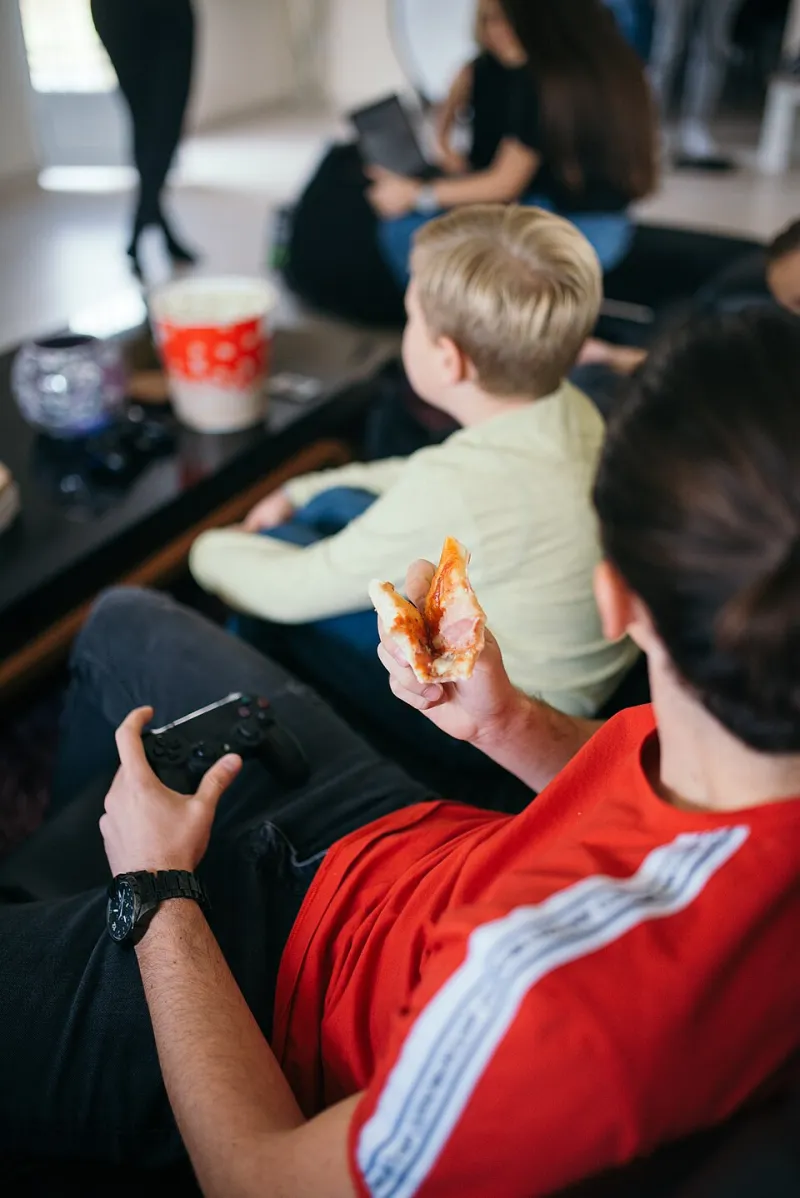
Photo: Nenad Stojkovic, CC BY 2.0, via Wikimedia Commons
At some point in the mid-2000s, game developers decided couch co-op was a relic. Online multiplayer was the future. Why would you want your friend physically present when you could have strangers from across the country yelling slurs at you through a headset? Progress!
Except players apparently didn't get that memo. Local multiplayer is surging — not as a nostalgia gimmick, but as a genuine preference among people who've grown tired of what competitive online gaming has become. And the indie developers paying attention to this are quietly building some of the most beloved games of the past few years.
Online Gaming Has a Vibe Problem
Let's be honest about what online multiplayer actually feels like in 2024 for a lot of players. You queue into a match. Someone disconnects immediately. Someone else is cheating. Someone is screaming. The person at the top of the leaderboard has 4,000 hours in the game. You finish, mildly frustrated, and queue again because the loop is engineered to keep you doing exactly that.
Even the social layer has degraded. Discord servers for games are enormous, impersonal, and full of people who mostly post memes and argue. Voice chat with strangers is something most players under 30 have essentially stopped doing. The promise of online gaming — that it would connect you with a global community — has largely curdled into an experience that's more exhausting than fun.
Couch co-op offers the opposite of all of this. There's no queue. There's no matchmaking algorithm. There's no rank anxiety. There's just you, your friend, a bowl of chips, and a game you're both figuring out together in real time.
The Indie Scene Figured This Out First
While AAA studios were busy iterating on battle passes and ranked ladders, smaller developers were noticing something in their player data and community feedback: people wanted to play with their friends in the same room again.
Games like It Takes Two didn't just succeed — they dominated. That game won Game of the Year at The Game Awards in 2021, which is a remarkable thing for a co-op-only title with no competitive mode, no live service component, and no battle pass. It was just a really good game you could only play with another person, and players went absolutely wild for it.
Overcooked, Moving Out, Lovers in a Dangerous Spacetime, Unravel Two — the list of indie co-op games that have found massive audiences keeps growing. These aren't niche titles. They're showing up on gaming streams, getting gifted between couples and friends, and generating the kind of genuine word-of-mouth enthusiasm that no marketing budget can manufacture.
And the developers making them are intentional about the design. Hazelight Studios, the team behind It Takes Two and A Way Out, has made local and online co-op the entire foundation of their creative vision. Their games literally cannot be played alone. That's not a limitation — it's the point.
What Happens in the Brain When You're in the Same Room
There's a psychological dimension to this that's worth sitting with for a minute. When you're playing online with a friend on Discord, there's a layer of mediation between you. You're communicating through a mic, reacting to a voice, but you're not with each other. The shared experience is real but filtered.
In the same room, everything is different. You see your friend's face when they mess up a jump. You both instinctively lean toward the screen during a tense moment. You can hand someone a controller and physically demonstrate what you mean. The communication is richer, faster, and more forgiving — because when something goes wrong, you can laugh together instead of typing frustrated messages into a chat box.
Psychologists studying social bonding have consistently found that physical co-presence — actually being in the same space as someone — creates stronger social connections than mediated communication. Gaming has known this intuitively for decades. The couch co-op boom of the 90s and early 2000s wasn't just about hardware limitations. Those sessions built friendships in ways that online gaming rarely replicates.
Streaming Is Part of the Story Too
Here's a wrinkle that doesn't get discussed enough: local multiplayer is great to watch on stream. When two people are playing in the same room and something goes sideways, you get genuine, unscripted reactions. You see the physical comedy of someone slamming a controller or grabbing their friend's arm in excitement. That's entertainment that competitive online gaming — with its headsets and solo setups — simply can't produce as organically.
Content creators have noticed. Co-op streams with friends or partners consistently generate strong engagement because they feel real in a way that solo content or competitive matches often don't. The streamer isn't performing for the camera — they're genuinely having fun with someone they know, and the audience can feel the difference.
For a platform like 164343, where we're tracking what's actually moving in gaming culture, the co-op streaming wave is one of the more interesting developments of the past couple years. It's not just a content format — it's a signal about what viewers actually want to watch.
What This Means for the Industry
Major publishers are slowly paying attention, though they're characteristically late. Nintendo has always been the outlier here — Mario Kart, Super Smash Bros., and Nintendo Switch Sports have kept the local multiplayer flame alive across generations. But even Sony and Microsoft are starting to recognize that not every game needs a ranked ladder and a season pass.
The bigger shift is cultural. After years of gaming trending toward isolation — headphones on, door closed, solo queue — there's a visible appetite for gaming as a shared physical experience again. Local multiplayer isn't competing with online gaming so much as it's filling a gap that online gaming created.
Somewhere along the way, gaming forgot that it's more fun when the person you're playing with is close enough to elbow. Players remembered before the industry did. They usually do.