Word of Mouth Got an Upgrade: Inside the Private Communities Replacing Your Gaming Feed
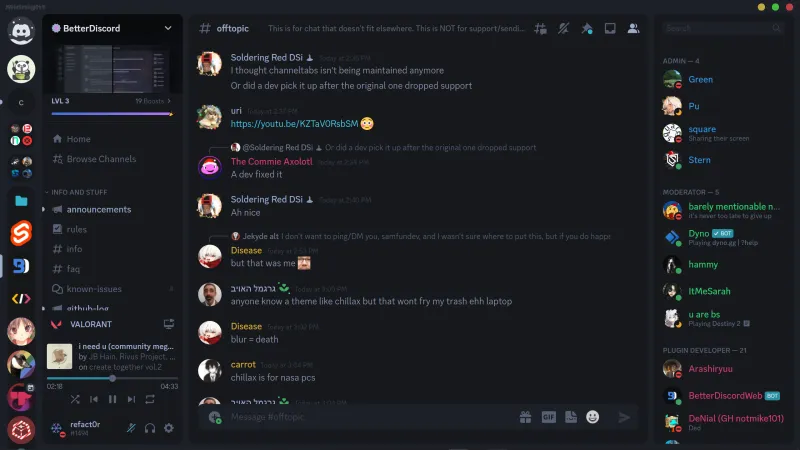
Photo: Discord gaming community chat server screen glow dark room, via user-images.githubusercontent.com
Remember when the YouTube algorithm used to surface genuinely weird, interesting stuff? When the Steam discovery queue felt like it might actually show you something you'd never heard of? Those days feel pretty distant now. In their place, we've got an endless loop of the same promoted titles, the same trending content, and the same handful of creators getting pushed to everyone simultaneously.
Gamers noticed. And a lot of them quietly stopped relying on algorithmic feeds altogether.
What replaced it isn't some new platform or a startup trying to disrupt discovery. It's something much older: people talking to other people. Just happening at scale, inside Discord servers, niche subreddits, and private communities that most of the internet has never heard of.
Why the Algorithm Lost the Room
Let's be real about what happened. Algorithmic discovery tools were never really built for genuine curation — they were built for engagement, which sounds similar but is fundamentally different. An algorithm optimized for engagement will always push you toward content that generates clicks and watch time, not content that's actually the best fit for your specific tastes.
For gaming, this created a feedback loop where the same massive titles dominated every feed regardless of what a user actually played. Smaller games — especially indie titles and niche genres — got buried. A player who loves tactical RPGs or immersive sims or obscure Japanese visual novels would get recommended the same open-world action games as everyone else, because that's what was moving numbers.
Over time, trust collapsed. Gamers started treating algorithmic recommendations the same way they treat sponsored posts — background noise at best, actively misleading at worst.
Discord Became the Living Room
If there's one platform that genuinely ate the algorithm's lunch for gaming discovery, it's Discord. What started as a voice chat tool for gamers has evolved into the closest thing to a functional community infrastructure the internet has produced in years.
The key isn't just that Discord exists — it's how people use it. Servers organized around specific genres, specific games, specific playstyles, and even specific regional communities have become the primary place where a huge chunk of the US gaming audience finds out about new releases. Not through banner ads or promoted posts, but through someone in the #game-recommendations channel saying "hey I've been playing this for 40 hours, you need to try it."
That word-of-mouth signal carries enormous weight precisely because it comes from a trusted source in a context you've opted into. You're not getting a cold recommendation from an algorithm. You're getting a hot tip from someone who plays the same stuff you do and has been talking with you for months.
For indie developers especially, getting a foothold in the right Discord server can be the difference between a game finding its audience and disappearing without a trace. Several breakout indie hits over the past two years have credited Discord communities as the primary driver of their early momentum — not press coverage, not social media campaigns, not influencer deals.
Reddit's Niche Subreddits Are Doing Real Work
Reddit gets a bad rap sometimes, and honestly, the front page probably deserves it. But zoom in on the niche gaming subreddits and you'll find something genuinely valuable happening.
Subreddits like r/patientgamers, r/indiegaming, r/ShouldIbuythisgame, and dozens of genre-specific communities have developed their own discovery cultures that run completely counter to the algorithmic model. These are spaces where a game released in 2019 can get rediscovered and go viral within the community in 2024. Where someone can post a detailed breakdown of a game nobody's heard of and watch it get 3,000 upvotes and 400 comments from people who immediately went and bought it.
The r/patientgamers community is a particularly interesting case study. It's built around the explicit rejection of the hype cycle — members specifically avoid playing games at launch and instead circle back to them months or years later. That community has become one of the most reliable recommendation engines on the internet for people who are tired of chasing new releases and just want to find something genuinely great to play.
What This Shift Means for Indie Game Marketing
The collapse of algorithmic trust has created both a challenge and an opportunity for indie developers. The challenge: you can't just throw money at promoted posts and expect results the way you might have five years ago. The opportunity: authentic community engagement actually works now, maybe better than it ever has.
Developers who build genuine relationships with niche communities — who show up in Discord servers not to shill their game but to actually participate, who engage honestly on subreddits, who treat early players like collaborators rather than customers — are seeing real returns on that investment. It's slower than a paid campaign. It's harder to measure. But the audience it builds is stickier and more passionate than anything an algorithm delivers.
This is also reshaping how some indie studios think about development itself. If your most important marketing channel is community word-of-mouth, then building community-friendly features — good co-op, robust modding support, active developer communication — stops being a nice-to-have and starts being a core business strategy.
The Bigger Picture
What's happening here isn't just a trend in gaming discovery. It's part of a broader cultural shift away from passive consumption and toward active community participation. People are tired of being served content. They want to find it, share it, and talk about it with people who actually care.
Discord servers and niche subreddits aren't perfect. They have their own gatekeeping, their own drama, their own blind spots. But they're offering something the algorithm fundamentally cannot: the sense that your recommendation came from a real person who gives a damn.
In a media landscape saturated with sponsored content and engagement-optimized feeds, that feeling is genuinely rare. And gamers, more than almost any other audience, have gotten very good at recognizing when something is real.
The algorithm didn't die quietly. It just got replaced by something that actually works.