Real Money, Fake Worlds: A Look at the Billion-Dollar Markets Living Inside Your Favorite Games

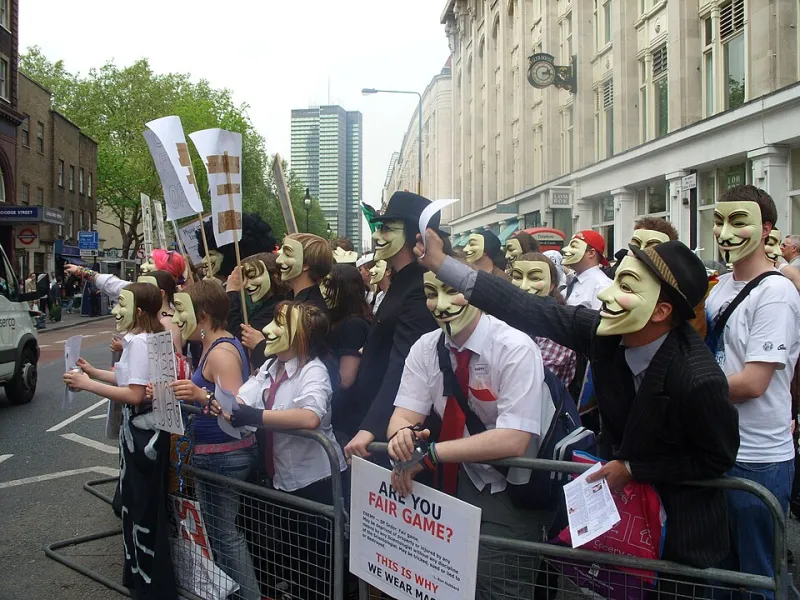
Photo: Alan Murray-Rust , CC BY-SA 2.0, via Wikimedia Commons
Picture this: a guy in Ohio sells a digital knife skin in a video game for $1,400. The buyer, somewhere in Europe, pays without hesitation. Neither of them thinks this is weird. And honestly, in 2024, it isn't.
The economy running through the seams of modern gaming is enormous, largely invisible to mainstream financial coverage, and growing fast. We're talking about a shadow market of digital goods — cosmetic items, in-game currencies, rare collectibles, full accounts — that generates billions of dollars annually and operates mostly outside the regulatory frameworks that govern traditional commerce.
Here at 164343, we decided to take a hard look at the numbers. What we found is a market that's equal parts fascinating, lucrative, and genuinely complicated.
The Scale of the Thing
Let's start with scope. The global market for in-game items and digital goods — counting everything from Fortnite V-Bucks to World of Warcraft gold to CS2 weapon skins — was estimated at over $50 billion in 2023, according to research from Newzoo and DFC Intelligence. That number is expected to climb through 2025 and beyond.
To put it differently: if the in-game trading economy were a company, it would comfortably sit in the Fortune 500.
But unlike a Fortune 500 company, this economy has no central headquarters, no unified regulatory body, and in many cases, no formal legal status for the transactions happening within it. Players are buying and selling goods that game publishers technically still own, through platforms that exist in a gray zone between marketplaces and black markets.
Skins, Cosmetics, and the CS2 Effect
No conversation about digital asset markets starts anywhere other than Counter-Strike. Valve's Steam Marketplace, which facilitates trading for CS2 (formerly CS:GO) cosmetics, is the most transparent and legitimized corner of the in-game economy. It's also the one that made mainstream audiences realize this stuff was serious.
The numbers on some CS2 items are genuinely wild. The "Souvenir AWP Dragon Lore" — a sniper rifle skin tied to a specific major tournament — has sold for over $100,000. Factory-new StatTrak knives regularly list in the $500–$2,000 range. Even mid-tier skins can fetch $50–$200 depending on wear and pattern.
Valve takes a cut of every Steam Marketplace transaction. So does the seller. It's a functioning, taxed (on Valve's end at least) marketplace that millions of US players use regularly. But Steam Wallet funds can't be cashed out — they can only be spent on Steam. So a lot of the real-money action happens on third-party sites like Skinport, DMarket, and BitSkins, where the regulatory picture gets murkier fast.
Account Trading: The Wild West
If cosmetic skins are the legitimate-ish side of digital asset markets, account trading is where things get genuinely chaotic.
Buying and selling game accounts is explicitly against the Terms of Service of virtually every major game. It's also incredibly common. Platforms like PlayerAuctions and G2G operate openly, listing high-ranked League of Legends accounts, maxed-out Diablo characters, and endgame Destiny 2 profiles for real money. Prices range from $20 for a mid-tier account to several thousand dollars for something genuinely rare.
The risks are substantial. Accounts can be recovered by the original owner. Buyers can get banned. There's no recourse if the seller disappears. And yet the market persists, because demand persists.
Estimates on the total value of account trading are hard to pin down precisely — by nature, much of it doesn't get reported — but analysts tracking third-party gaming marketplaces put the US segment alone somewhere between $2–4 billion annually.
NFT Gaming: The Cautionary Chapter
No piece on digital asset markets in 2024 would be complete without addressing the NFT gaming experiment — and specifically, how badly most of it went.
Between 2021 and 2022, a wave of blockchain-based games promised players true ownership of in-game assets. Axie Infinity was the poster child. At its peak, some players in the Philippines were earning meaningful income by playing and trading Axie NFTs. The floor price for entry-level Axies hit hundreds of dollars.
Then the market collapsed. Axie's in-game currency lost over 90% of its value. The broader NFT gaming space cratered. Most projects that launched in 2022 with blockchain promises are either dead or irrelevant.
What survived isn't nothing, though. A handful of more grounded blockchain-adjacent games are still operating in 2024, and the concept of verifiable digital ownership hasn't gone away entirely. But the get-rich-quick framing that defined early NFT gaming has largely been discredited, at least among experienced players.
Roblox, Fortnite, and the Teen Economy
Here's the part of this story that doesn't get enough attention: a significant portion of digital asset trading involves minors.
Roblox's virtual economy — built around Robux, its in-game currency — processed over $740 million in developer payouts in 2023. That's money flowing from parents' credit cards, through Roblox's system, and out to creators. Kids are learning to flip limited-edition virtual items, build and monetize games, and trade accessories in ways that genuinely mirror real-world economic behavior.
Fortnite's cosmetic market operates similarly, though Epic doesn't facilitate player-to-player trading. The secondary market for Fortnite accounts with rare skins (think OG Skull Trooper or Galaxy skin) is enormous on third-party platforms.
Regulators have started paying attention. The FTC has flagged concerns about loot box mechanics and in-game currency obfuscation — the practice of converting real dollars into a fictional currency so players lose track of what they're spending. Several states have introduced bills targeting these practices, though comprehensive federal regulation remains elusive.
What the Future Looks Like
The digital goods market isn't going to shrink. If anything, as gaming continues to absorb more of American leisure time and spending, the economy embedded in it will grow proportionally.
The open questions are about structure and oversight. Will the US eventually regulate in-game currency systems the way it regulates casino chips? Will major publishers create legitimate, cashable marketplaces that pull trading activity out of gray-zone platforms? Will blockchain technology find a sustainable, non-speculative role in digital ownership?
Nobody has clean answers yet. But the money is real, the market is real, and millions of American players are already participating in it — whether they think of themselves as traders or not.
Next time you buy a skin, a Battle Pass, or a new character unlock, you're already in the economy. The only question is how deep you want to go.